Study abroad #6
Nepal - April 13 to May 9, 2026

It has been nearly a month! Let me fill you in—
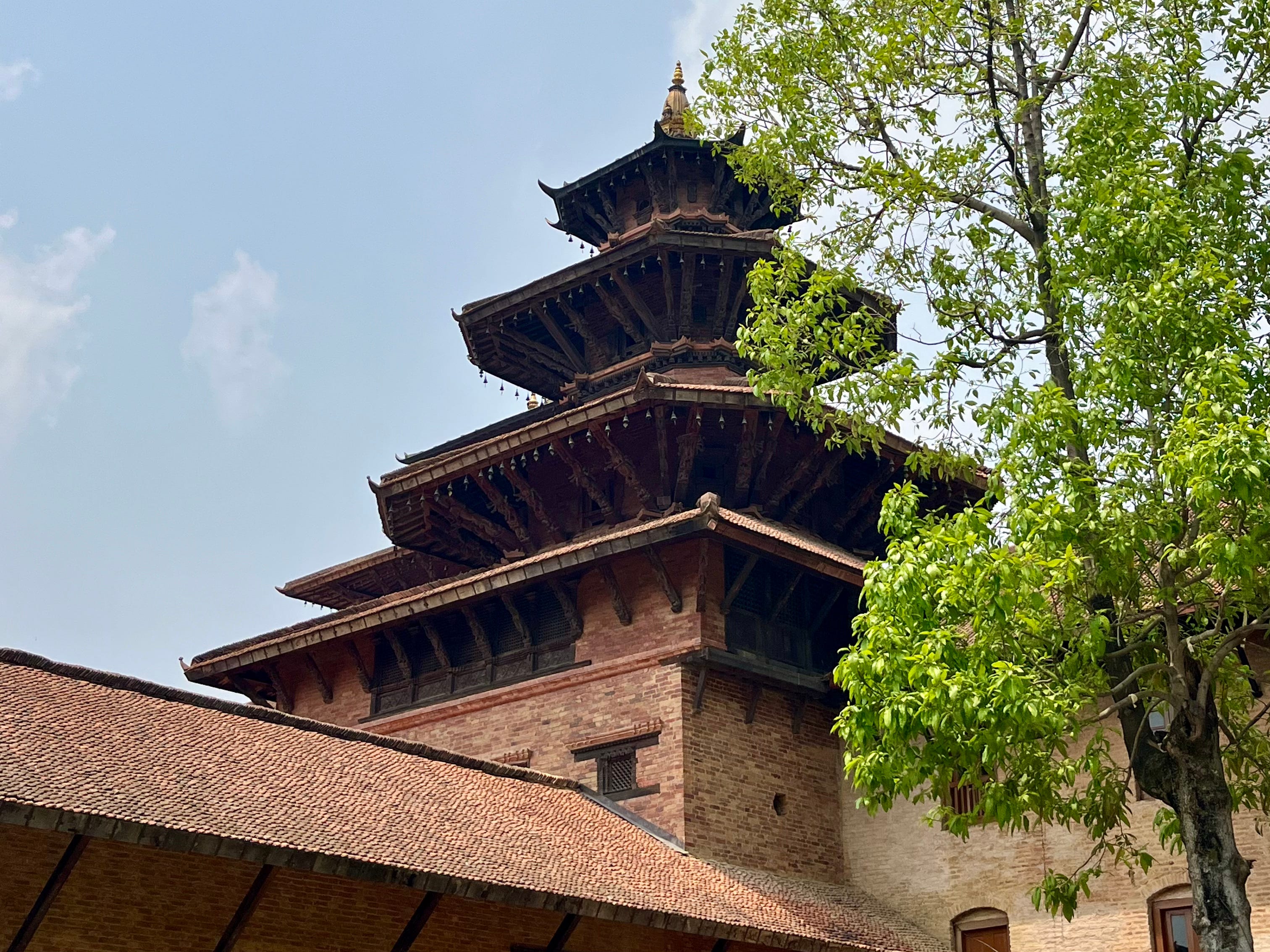
My cohort and I arrived in Kathmandu, Nepal over thirty hours after we’d left our homes in Morocco. We spent those hours pirouetting through time zones—asleep at our gate in the Casablanca airport, hacky-sacking and indulging in the food of the Rome airport, running like maniacs through Delhi’s airport, and finally, arriving home sweet home at the Kathmandu airport.
On that last flight—Delhi to Kathmandu—I felt a flash of anticipatory grief.
Listening to Jason Isbell and Norah Jones through my headphones, artists who remind me of my parents back home, I felt a weight set in—this was the last flight I would take as a student of this program. The twenty-six hooligans that had become my funky, temporary family surrounded me, buried between neck pillows and eye-masks with their mouths open, asleep.
Upon landing, collecting our bags in a state of giddy delirium, and meeting the country coordination team who would become something like the parents of our makeshift family, my sadness washed away without needing prompting.
The beautiful thing about this program is that there is never a dull moment.
After two days spent jet-lag recovering at a hotel, pigging out at the buffet, and sleeping at egregious hours of the day, we were off to the races again.
Diving headfirst, we dispersed around Kathmandu’s historical neighborhood Patan, moved in with our homestay families, and began the long process that has been sorting out Nepal’s complex political, historical, and environmental context.
I don’t think I’ve mentioned this here, but my program’s focus is on the politics of land, water, and energy justice across Ecuador, Morocco, and Nepal—and unlike a traditional study abroad program, we are all together all the time with very little independent freedom.
Personally, I have loved this format. It has instigated our family dynamic as a group and given us access to fascinating, unconventional classrooms (i.e. mountainsides, farms, power plants, jungles, deserts, etc…). Simultaneously, this program does not play when it comes to academic rigor, which is why I was prepared for Nepal to be the most stressful leg—final projects and research papers coming to a head at once.
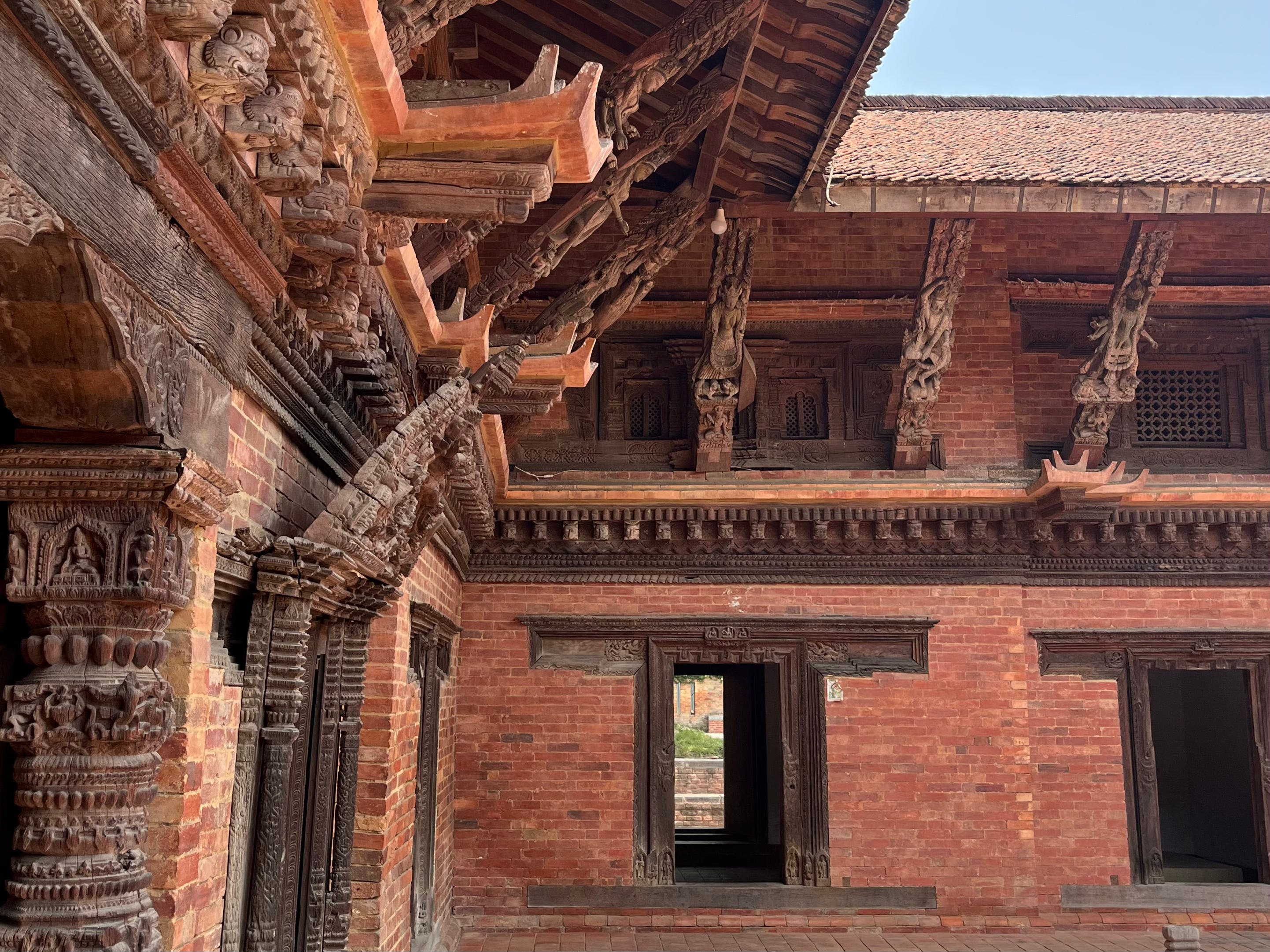
With that being said, Nepal has been the country I have sunk most deeply into.
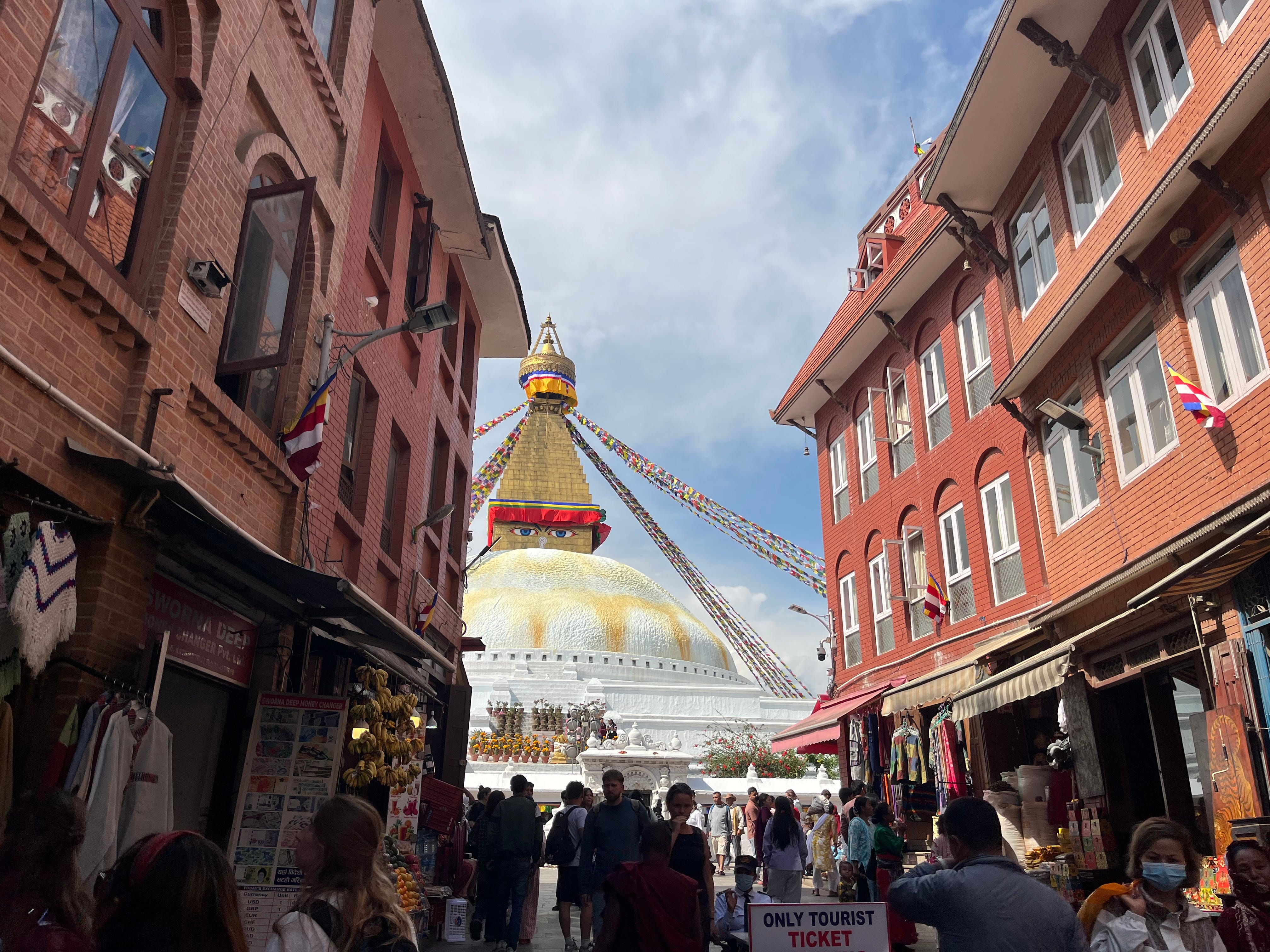
From the moment we stepped out of the airport, I was in love with all the colors.
The pink, red, golden sarees adorning every passing auntie,
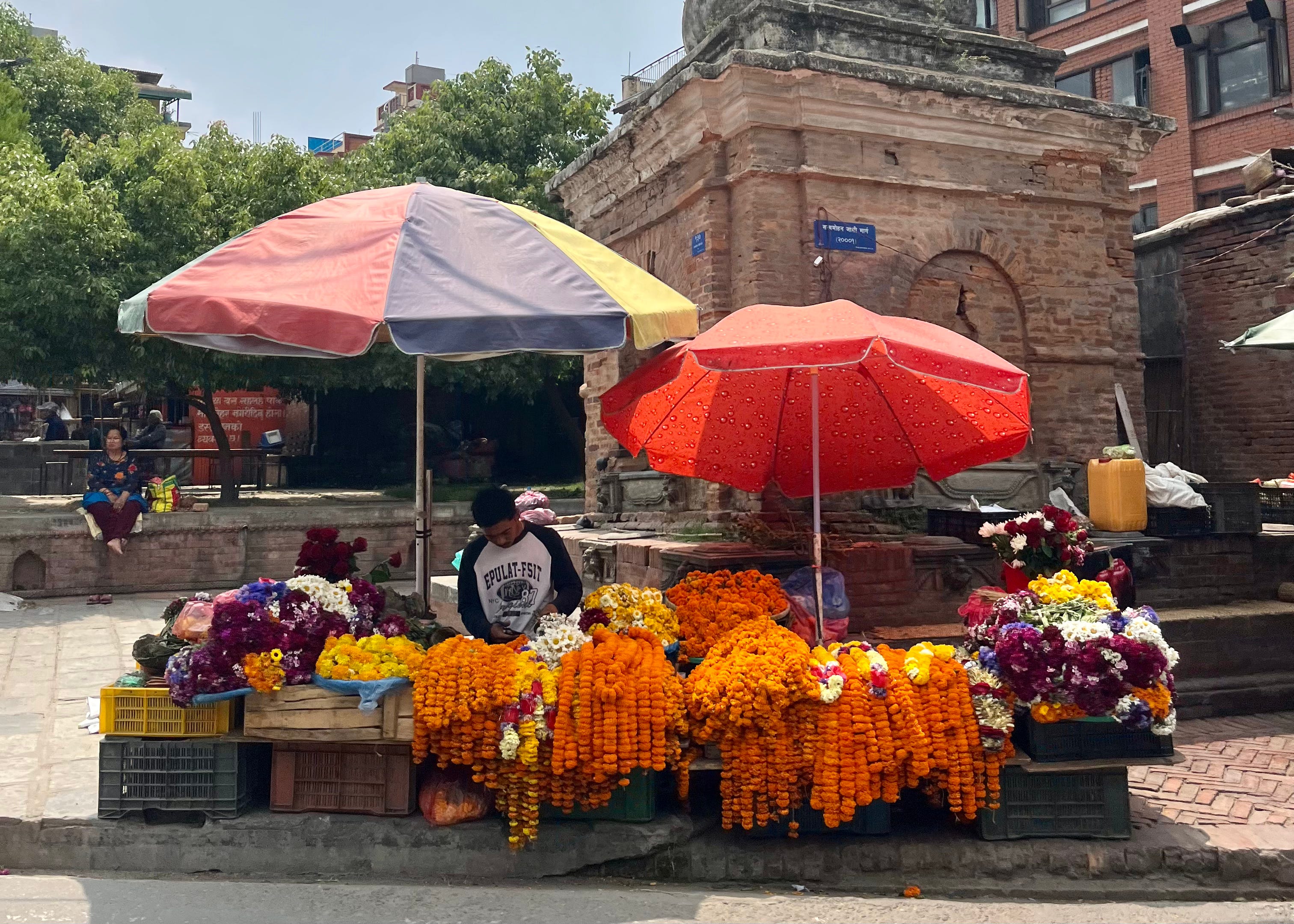
The sumptuous warm bricks and bright-orange marigold garlands,
The white, red, green, yellow, blue fluttering Tibetan prayer flags,
The murals, vegetables, Buddha sculptures and smells—all wonderfully bright.
And I felt something I hadn’t felt in a while—the feeling of being at home—even in this bustling, noisy city I’d never been before.
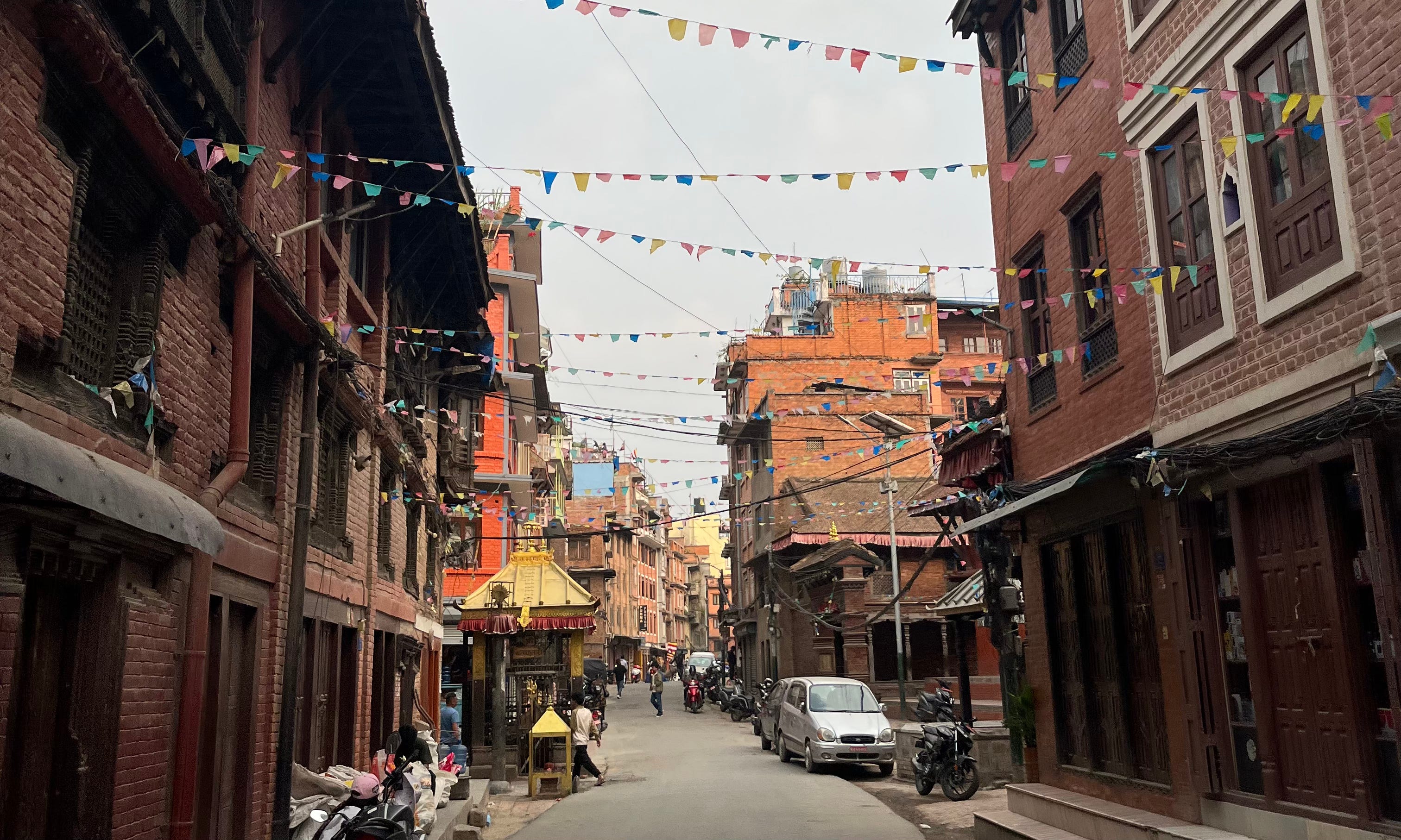
Here are a few things that became immediately apparent:
First—if I wanted to, I could blend in here. My dark hair and ambiguous Asian-ness allowed me to walk these streets free from the head turns and stares I had become so accustomed to in Morocco. The unbridled glee I felt walking around alone at night, completely safe and anonymous, reminded me to never take this feeling for granted again. I didn’t realize how much this reality of Morocco weighed on me until I was free of it.
Second—Nepal has a fascinating history and culture. Sandwiched between India and China, Nepal contains the dichotomy of 240+ glacial-capped peaks that loom over 20,000 ft, and a lowland jungle filled with elephants, rhinos, tigers, monkeys and more. The birthplace of the Buddha, Nepal is home to 30 million people who largely practice a blend of Hinduism and Buddhism, there are 50+ recognized Indigenous groups, and everyone I’ve met has been kind as can be.
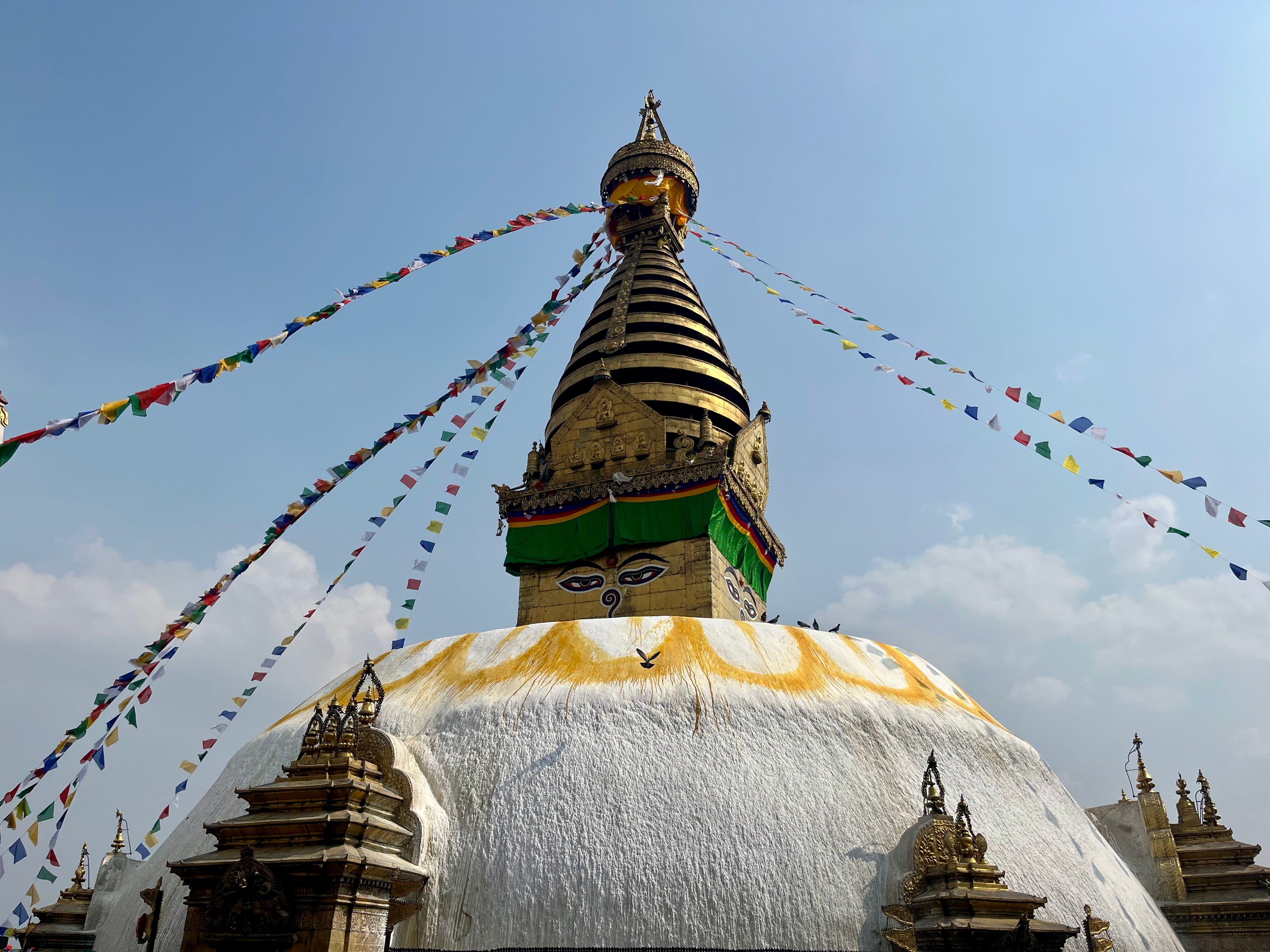
Though modernly viewed as an “under-developed” nation (with many arguing about who this development narrative really serves…), Nepal was once a wealthy monarchic kingdom, acting as the intermediary between Tibet and India on the trans-Himalayan trade route. Displays of this ancient wealth can be seen in the beautiful UNESCO World Heritage sites sprinkled throughout the country—one of which, Patan Darbar Square, is just a five minute walk from my home (pictured above).
Nepal also sits at a fraught climate nexus between monsoon floods, massive earthquakes, and rapidly melting glaciers. Yet, the population best positioned to respond to these catastrophes keeps shrinking as outmigration pulls young people away in search of opportunity.
And to think that all of these anecdotes offer barely 1/8th of a teaspoon of what is fascinating and special about this magnificent country!
Our time in Nepal has been structured similarly to that in Morocco—two weeks living and bonding with our host families with full days of classes and/or field trips, one weeklong excursion, and then another two-ish weeks at home.
At this point, those first weeks feel like a precious memory.
My program sister, who I’m sharing a host-family and bedroom with, is named Ari. She is a wonderful, full-of-passion type of person who makes me laugh daily. Our host family is comprised of a mother-daughter duo, with the father living in a different city for work, and the other children studying and working in Taiwan.
Supriya, the daughter who’s home, is just a couple years older than Ari and I, and is finishing her bachelor’s degree at the University of Kathmandu. It has been so much fun to have someone our age who speaks English in the house, and we’re even more lucky because Supriya is awesome. Her and her mother have been so generous and welcoming, and are certainly a great deal of the reason that Nepal feels like home.
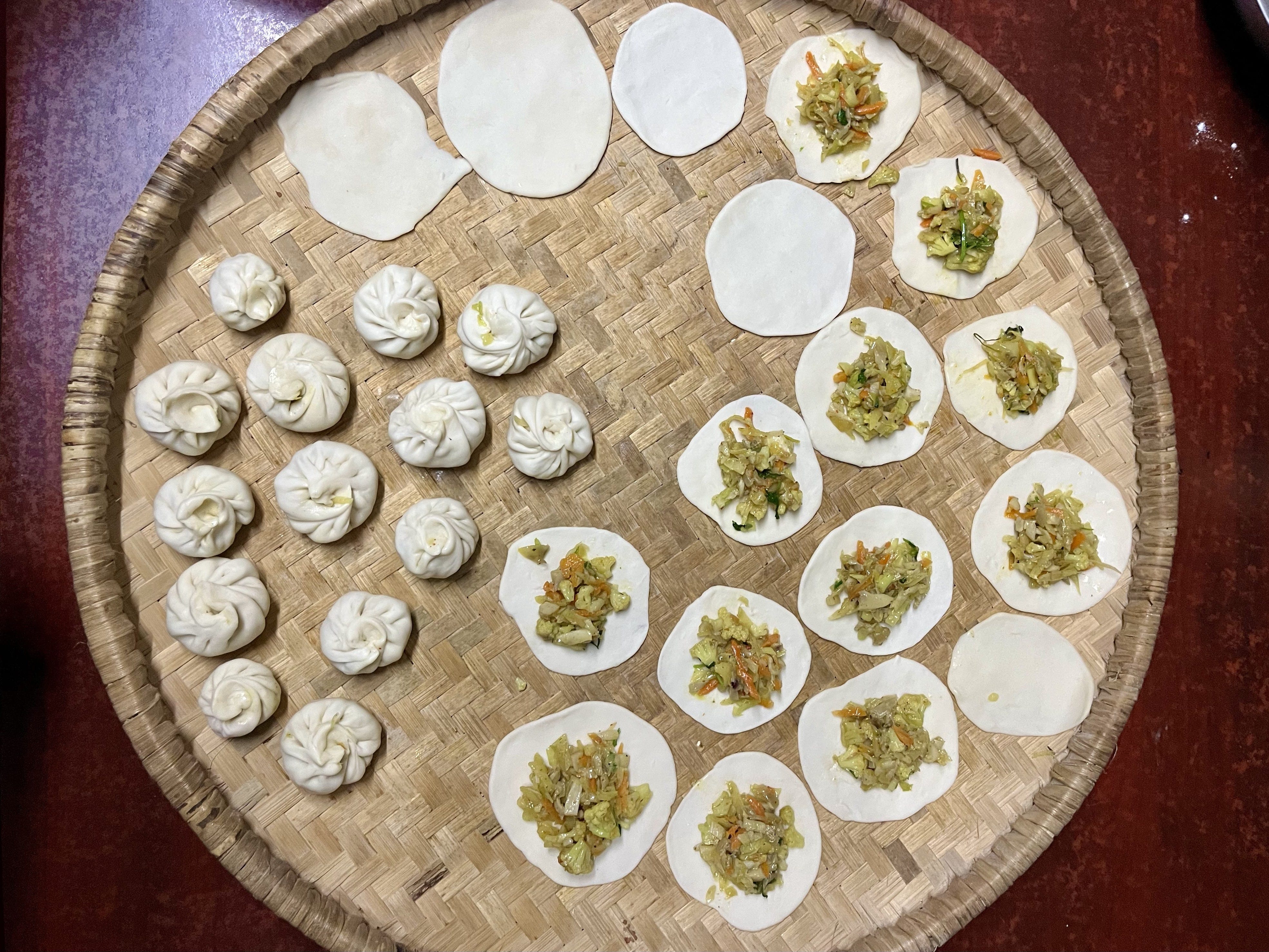
Food in Nepal has also been something so comforting.
Rice, vegetables, spices, mushrooms, lentils, delicious fruits, and more…
Occasionally, our host mom has even gotten Ari and I a pastry from the nearby bakery for breakfast, or has bought the infamous Bhaktapur Juju Dhau, a delicious yogurt made from buffalo milk in the adjacent city of Bhaktapur.
Something interesting about this yogurt is that it is traditionally prepared by Newari people, an Indigenous group centered here in the Kathmandu Valley. Our host family is Newari and it has been special to learn about their culture from such an intimate angle—observing pujas (prayers/offerings), trying Newari foods, and learning about their community and its impressive festival calendar.
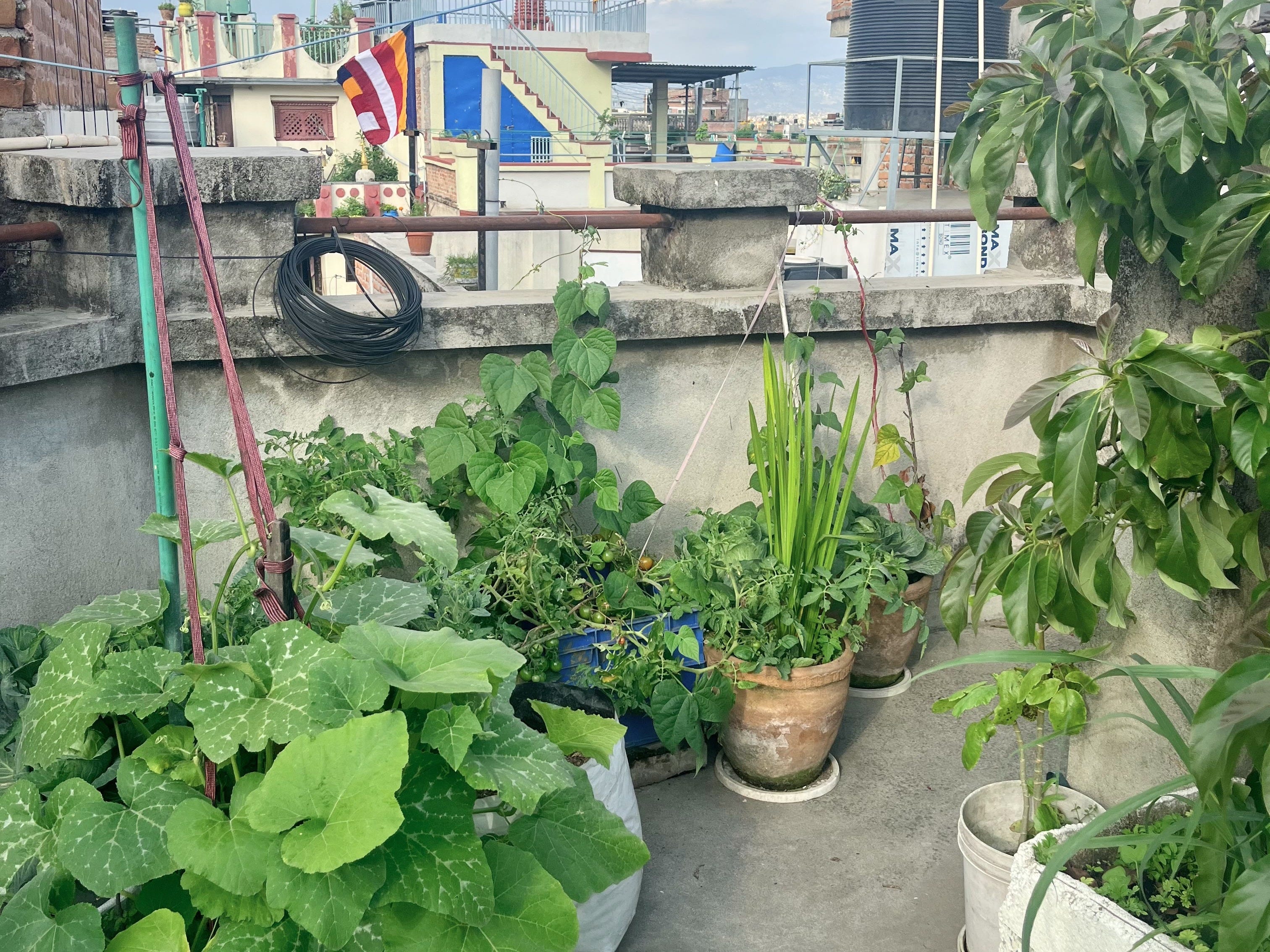
Another thing I’ve loved getting the chance to see is how self-sufficient our host family lives. The terrace atop their home is small, maybe similar to the footprint of a minivan, yet it is alive with potted plants, fruits, vegetables, and herbs that our host mom uses to cook with daily. So, not only does our host mom operate the single smallest and most productive little urban farm I’ve ever seen, but she also makes almost everything in this home from scratch. Homemade tofu, tea, soap, pickles, all of our meals… it is truly incredible and inspiring to see what she is able to do—especially in such an urban context.
Just as we were hitting our stride in Kathmandu, making sense of Nepal’s unique blend of spiritualities, its history and fascinating current political situation, memorizing our routes through the winding bustling streets to our classroom space, and considering very deeply what it means for a country to be in a position of such environmental precarity, we were whisked off our feet to the Himalayas.
Okay—that makes it sound dramatic, but it was time for us to embark on our weeklong excursion where we’d split time equally between the high mountains and lowland jungle.
Our first destination was deep in the Manang Valley in a village called Bhratang, where a single family owns and operates a lodge, winery, and tea shop for trekkers and motorcyclists passing by. This place, the ancestral land of a unique blend between Indigenous Nepali and Tibetan peoples, sits on the renowned Annapurna Trekking Circuit and is surrounded by some of the most stunning and dramatic mountainscapes on the planet.
Our journey to Bhratang took twelve hours.
We left home around six in the morning in a large bus that wound through the big green foothills of the Himalayas. We’d been previously warned by our coordinators (and offered anti-nausea dramamine) that the roads in Nepal are notoriously bad.
But how bad could bad roads be? I spend my summers bumping up and down the forest service roads of mountainous Washington—I didn’t think I had anything to worry about.
And for a little while, I didn’t. The bus careened around corners, weaving from the left to right side of the road as seems normal in Nepal, and I slept soundly in my seat.
At some point though, the roads turned from paved, to gravel, to mud, to… rocks?
It remains a miracle to me that the big goofy bus was able to get over and through all of this terrain with little to no issue.
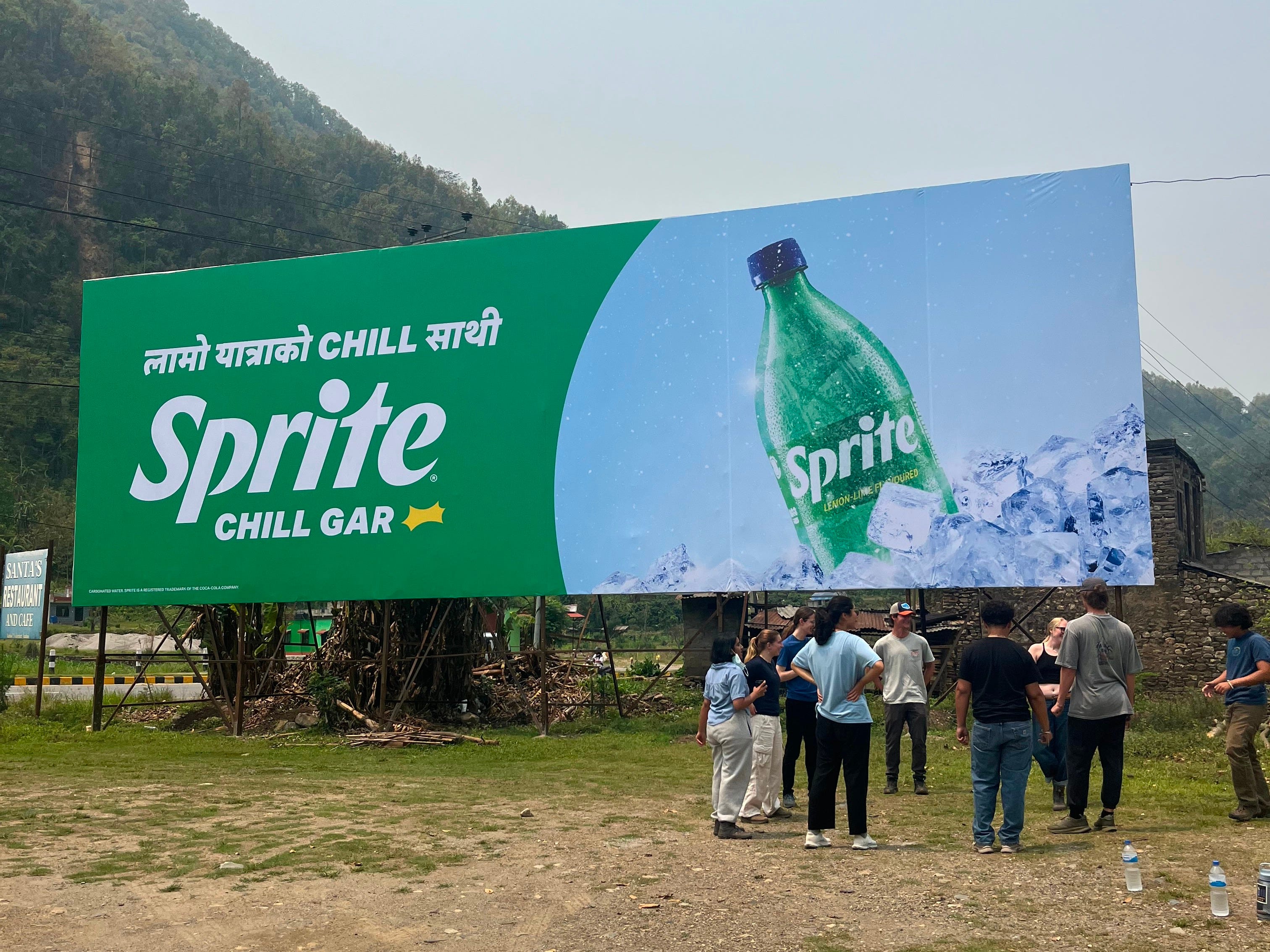
After we stopped for a quick roadside lunch, played some hacky sack in front of a gigantic Sprite billboard, and bumped around for another hour or two on the bus—we transitioned into five-person jeeps.
The jeep section of this journey took 5-or-so hours and was undoubtedly the most treacherous part. We winded through the steepest valleys I’d ever seen in my life on the tiniest strip of rock and mud carved into the wall of a cliff.
It was interesting to learn from spending time in Bhratang that the presence of this road has changed everything for the valley—from access to schools, the influx of tourism, to several hydroelectric projects being operated in the river below by a Chinese corporation.
What I viewed as a terrifyingly rugged version of a “road” was actually an incredibly complex, story-filled ribbon of transportation, change, and comings and goings from this valley.
And, after five hours of being tossed, shaken, and swung around from my middle seat of the jeep, I was so grateful to arrive to the lodge.
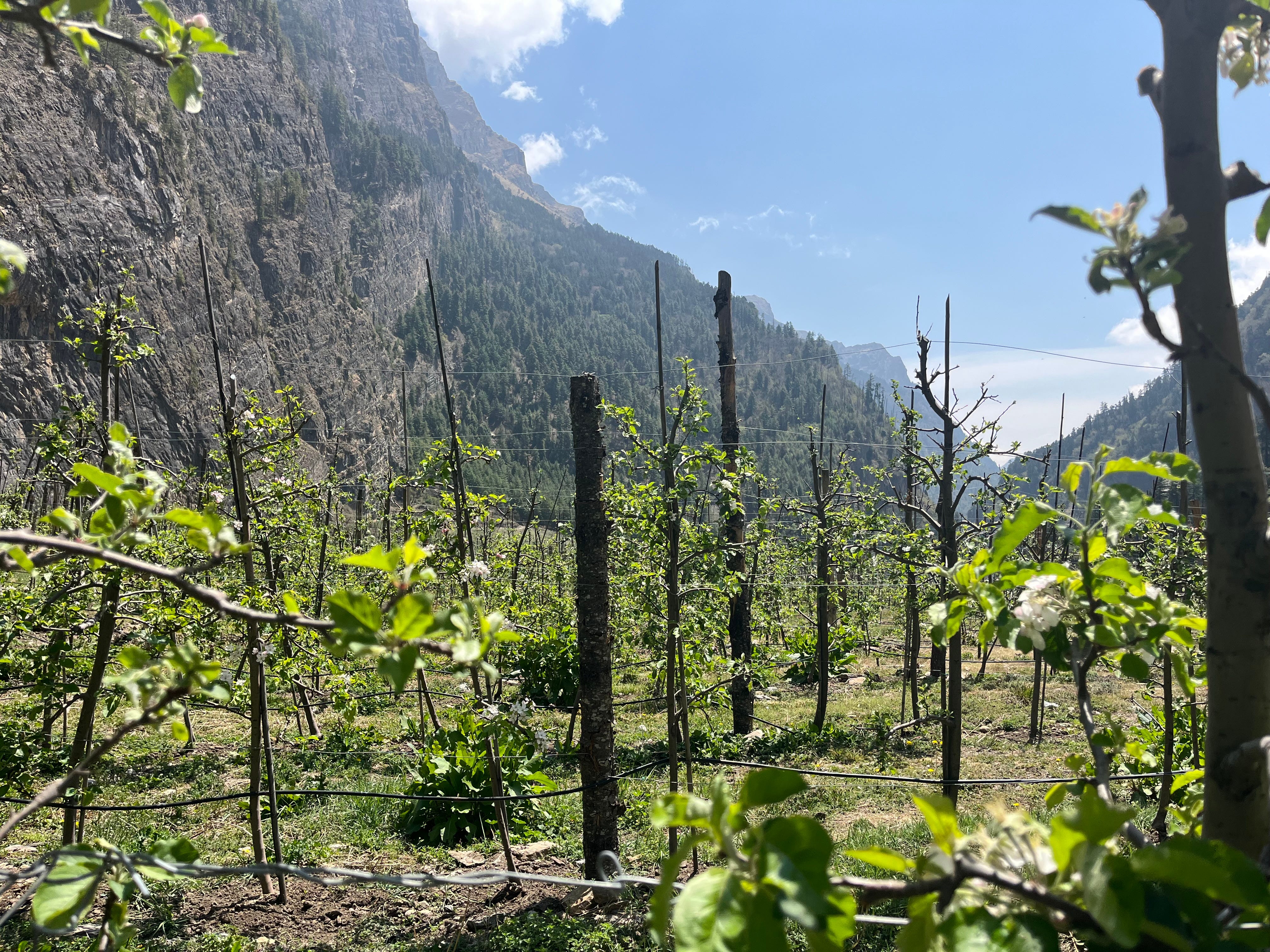
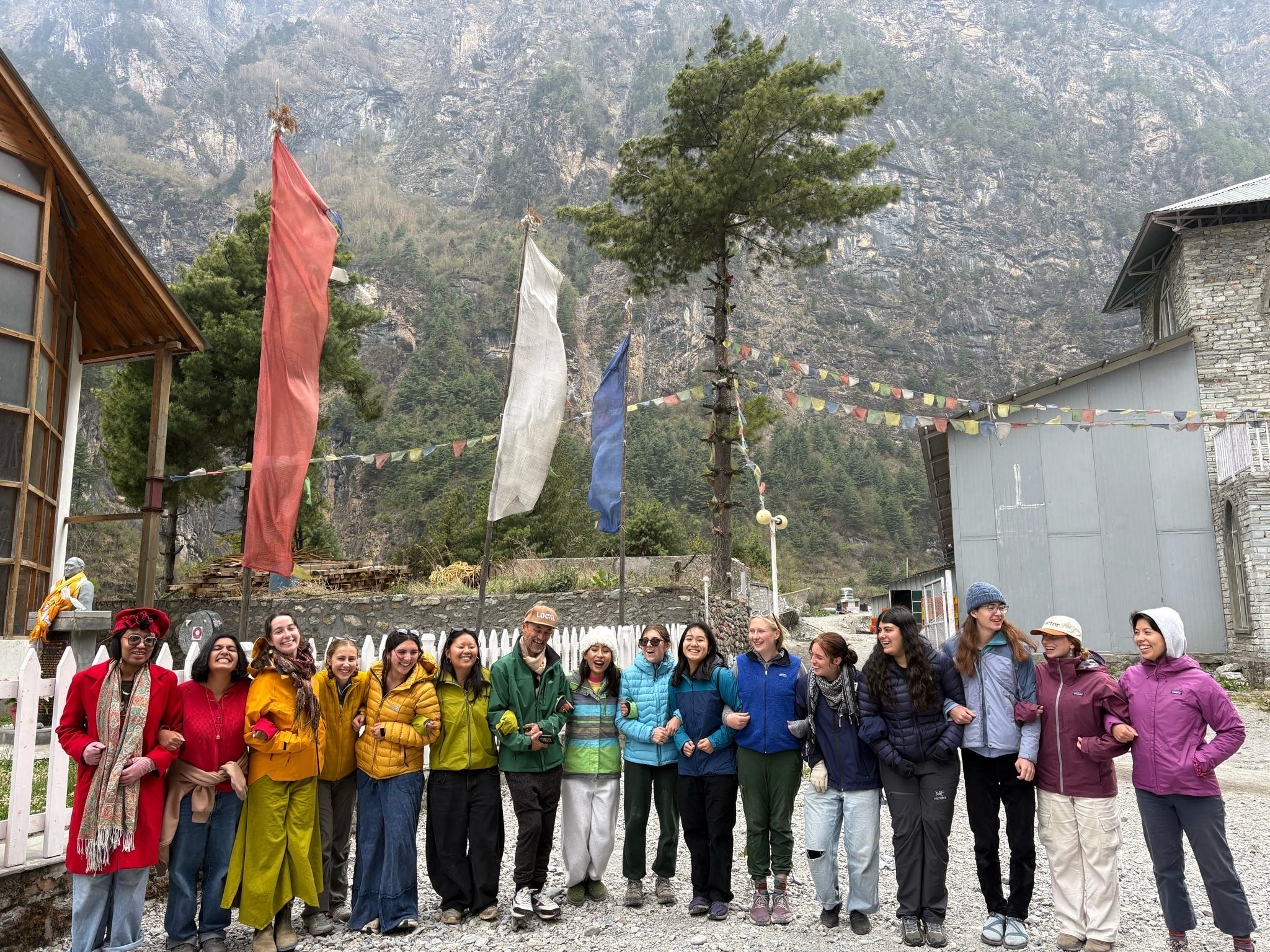
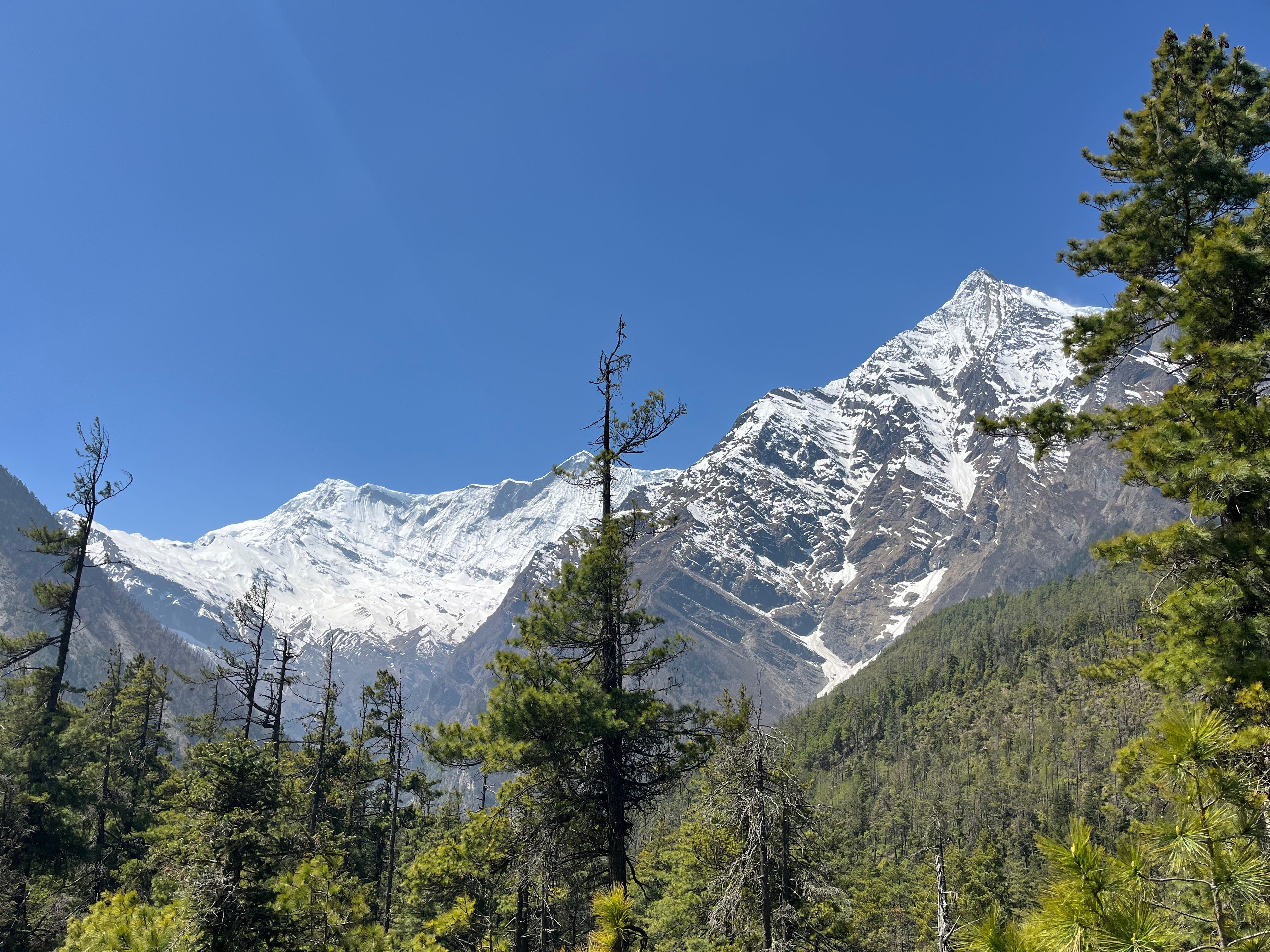
Our four days in the Manang valley were marvelous.
I felt indescribable bliss in the shadow of these mountains and evergreen trees, with a glacial river rushing below me.
If Kathmandu felt like home, this was home—I saw Washington in every pine needle, snow pocket, and warm whispering wind gust.
It was sitting among the apple blossoms here, journal open on my lap, when I realized that home can be anywhere. Home can be the way my heart feels in this field, in the mountains, under the sun. Home can be the way Sarah and Lucas and Joanna make me laugh. Home is a feeling.
And, with this realization came a simultaneous other—home is also a very specific place I long for: dog walks with my mom, watching the great blue heron wade and warble along the shore, the walls of my bedroom plastered without an inch to spare in photographs, art, and memories. Home is also a place.
Here, under the shadow of Annapurna II, we learned about high altitude farming, irrigation, and community governance systems. The eldest son of the family, whose farm and lodge we stayed at, taught us about the valley's relationship with the Annapurna Conservation Area Project and what it was like to rebuild after a nearby glacier calved into a lake, causing a devastating flood.
We even got the opportunity to hike up to a sacred lake, allowing us to fully steep in the majesty of the high mountains that surrounded us.
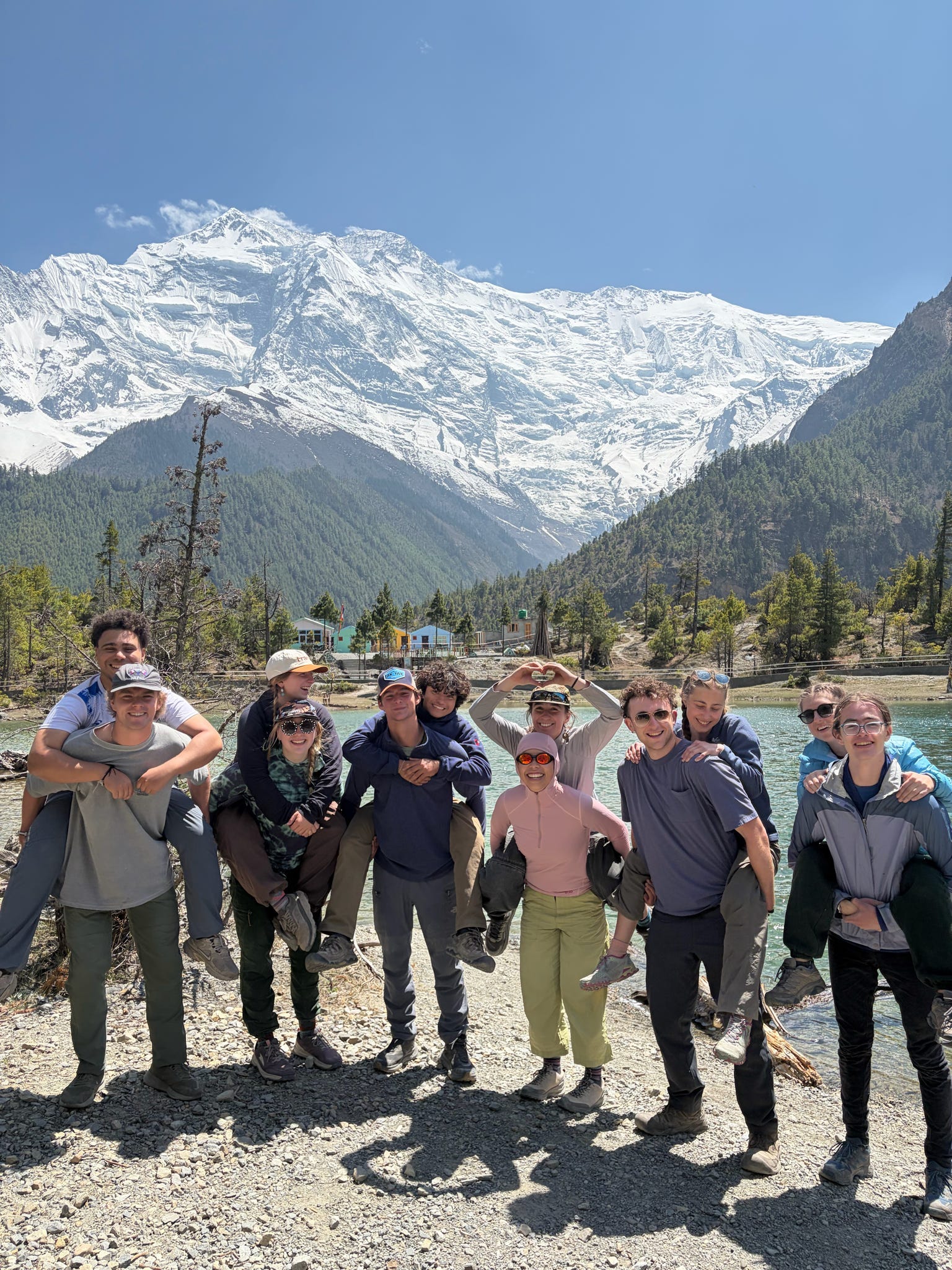
It is in moments like this when gratitude doesn’t seem sufficient, and I struggle to make sense of the privilege it has taken for me to be here.
So many people I love—new and special friendships that have moved me to reconsider the social architecture of my life apart from this program, the generosity and willingness of the people whose land and homes we pass through, and the places I never imagined setting foot in.
All of it feels like the greatest, most special gift.
And what great inspiration to continue forth motivated and driven. To carry what I’ve learned on this adventure into my relationships, communities, and pursuits. To create the conditions for more people to have experiences like I have here. To live colorfully with the determination and joyfulness of the people that surround me here.
When our four days in the valley were up, I left with a cup so full that even another 10+ hour travel day across the country to the lowland jungle couldn’t phase me.
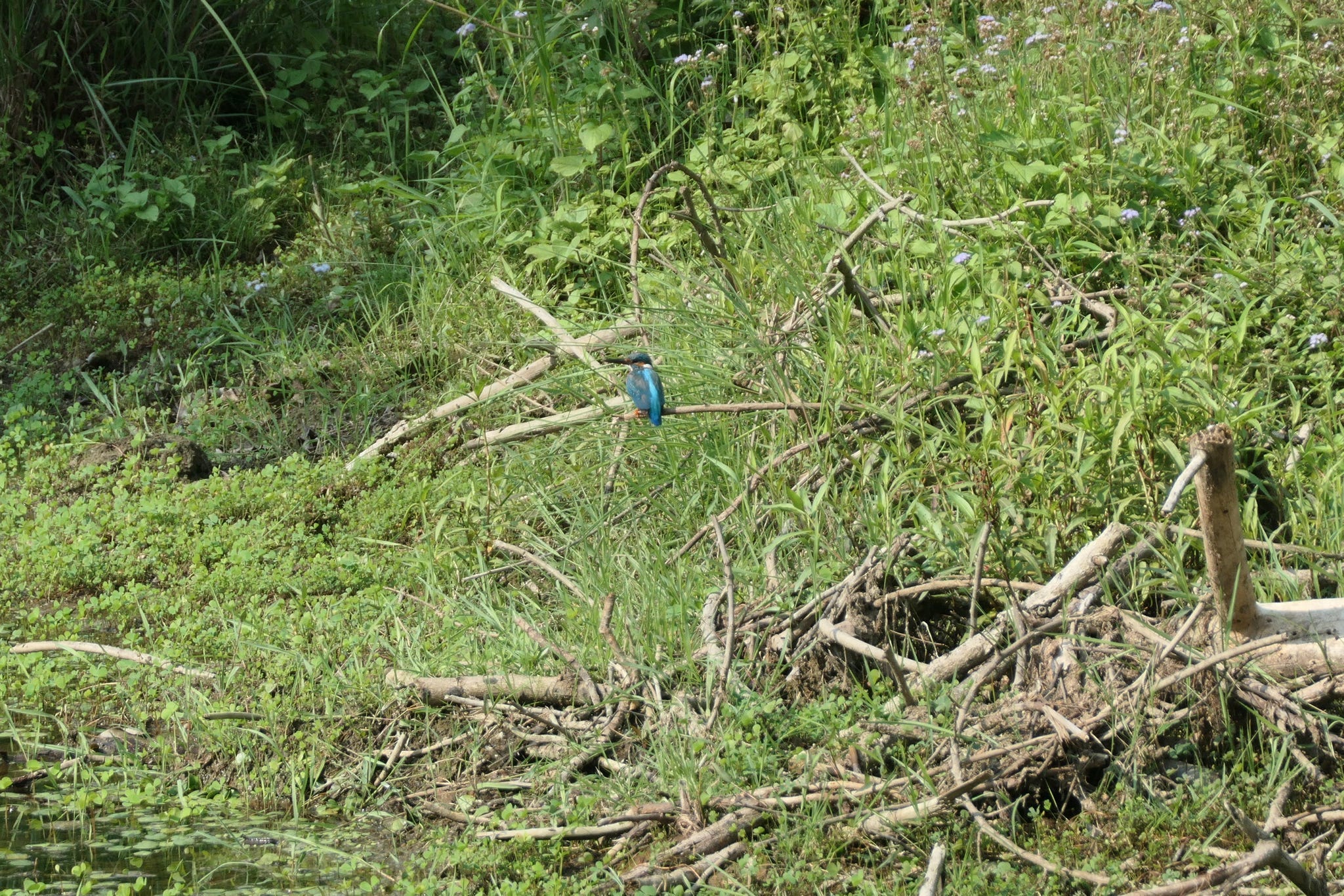
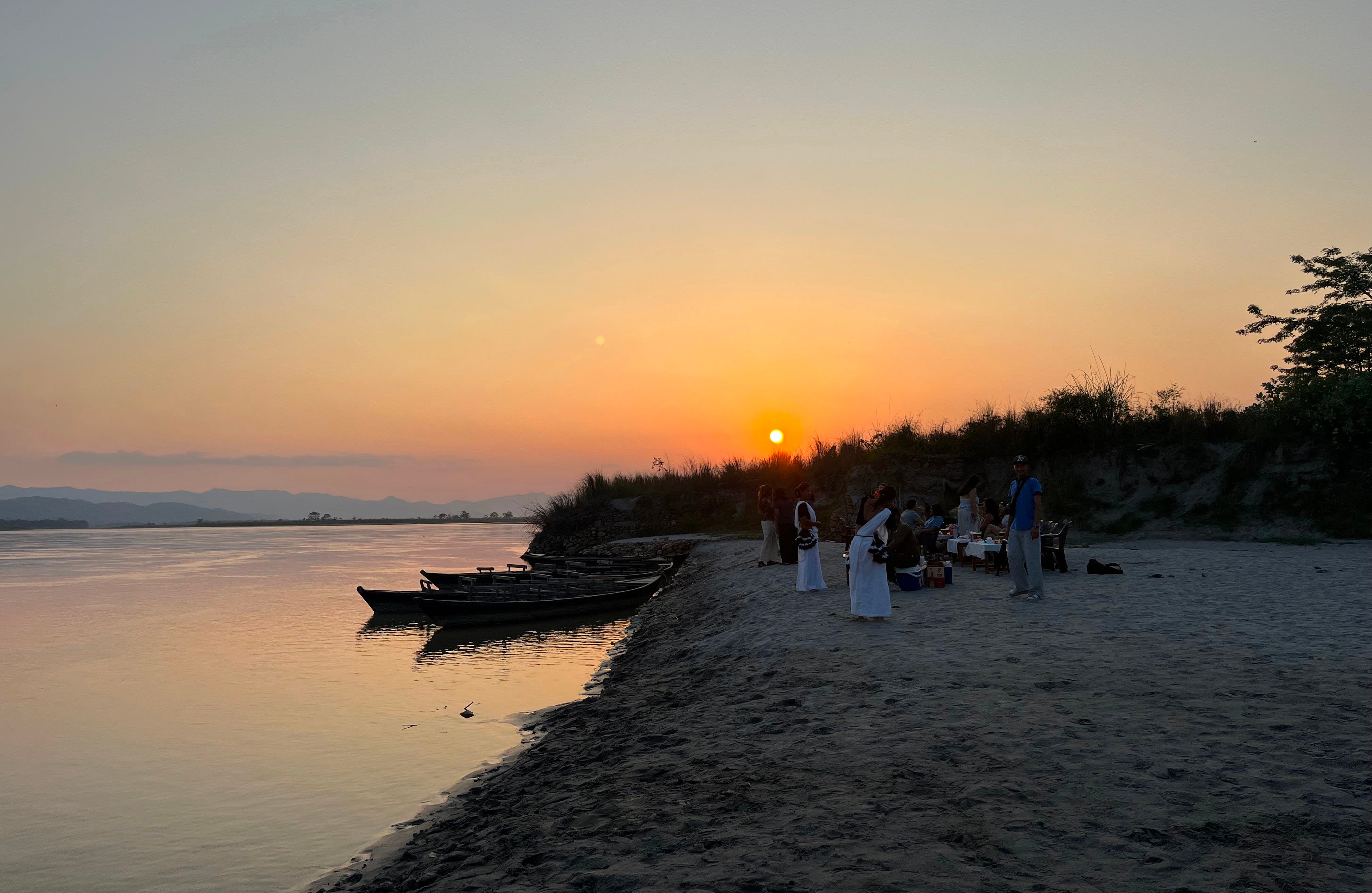
We arrived in the Terai long after darkness had fallen, but the occasional flash of the brightest lightening I have ever borne witness to gave away sneak peeks of our new surroundings.
Rain poured, the bus jostled still, and I smiled sadly thinking of how this was our last overnight learning excursion together. After an experience that has felt so all consuming, these final terminuses have stuck out bittersweetly.
The Terai spans the southern region of Nepal, shares a border with India, and is the breadbasket of the country. During our time here we had a handful of lectures, some time to work on our approaching deadlines, a safari, and a cultural dance presentation by the local Indigenous community, the Tharus. We also split into our “nexus” groups, of which a third of us are looking more closely into water, a third into land, and a third into energy. One of our final presentations will be in these groups, where we will each share themes and stories we have collected across all three countries. My group, land, got the chance to visit a farm here in the town of Kawasoti and talk directly to the man that grows there.
One anecdote he shared—since Nepal’s recent GenZ-led political shift and the election of its young prime minister, who is dismantling and reconfiguring many government systems, 55 pounds of tomatoes that would’ve previously earned him only 200 Nepali rupees now earns him 1,000.
India, which formerly was competitive in supplying Nepal’s tomatoes, has blocked any sales in protest of their new radical governance.
We also learned that the government’s recent ban on India-grown bananas has caused this farmer’s banana-farming friend to sell out at the market in minutes!
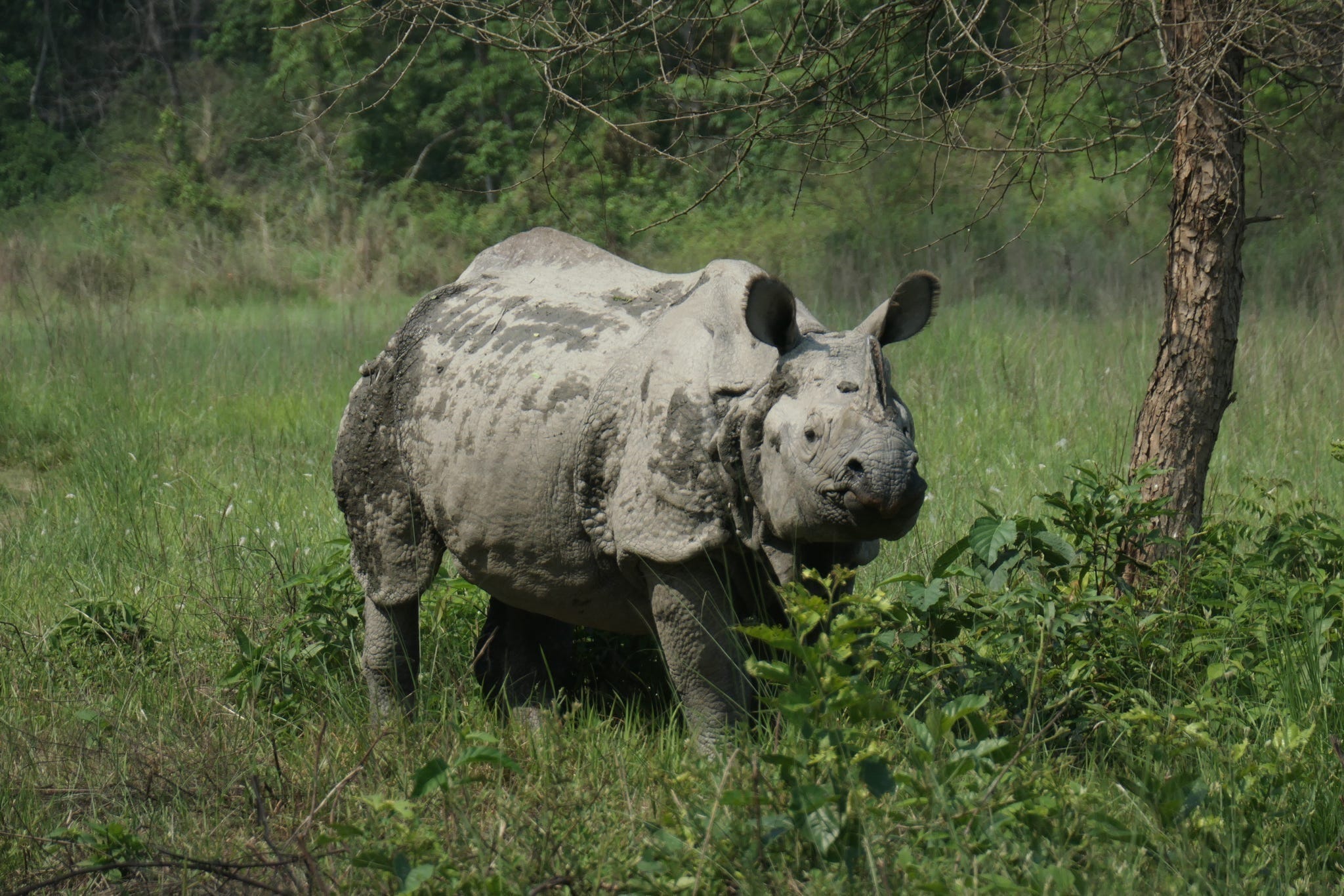
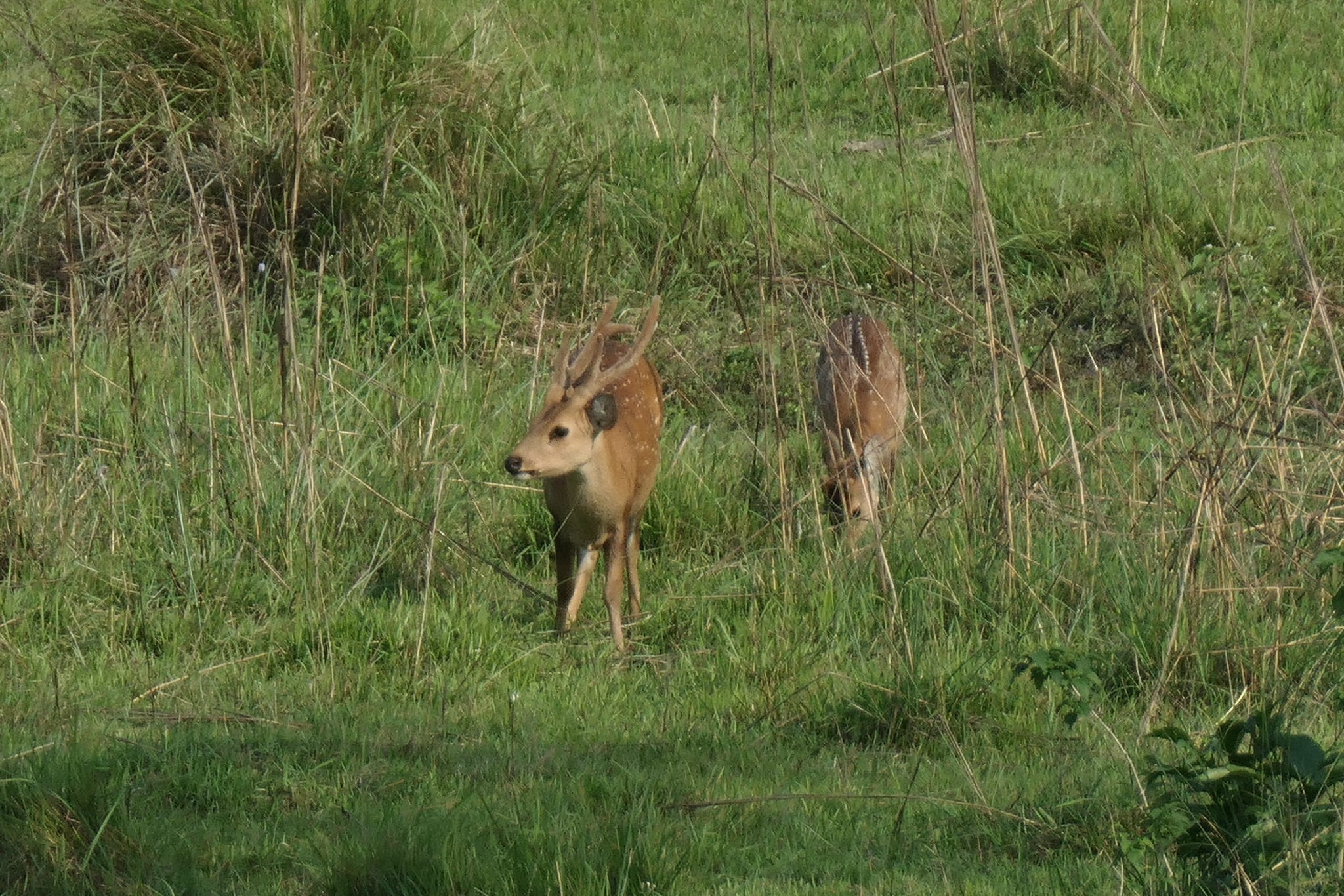
It is hard not to place the highlight of this portion of our excursion on the safari we took into the buffer zone between the human community and Chitwan National Park. Having the chance to see a wild rhino up close and personal for the first time in my life took my breath away.
I couldn’t believe that an animal this massive and majestic had such small derpy eyes!
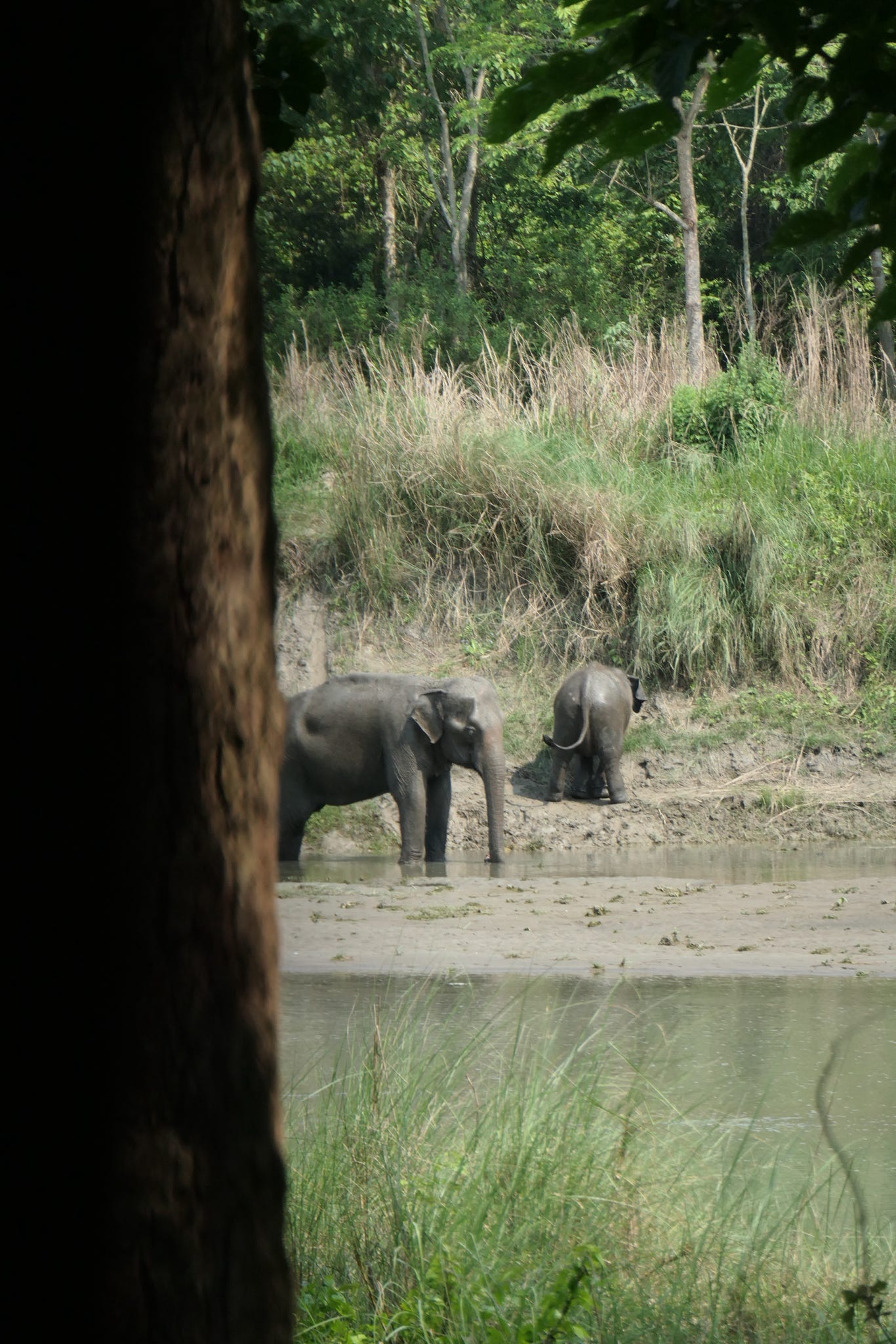
My friend Adina took these wonderful photos from the front-seat of our jeep. Thank you Adina!
By the time our stay in Kawasoti was wrapping up, I could feel my mind shifting into work mode, with many big assignments looming over our heads. Still, I treasured what we saw and learned in the Terai, and felt lucky to have gotten to see this juxtaposition perspective of Nepal.
While returning to Kathmandu meant it was time to focus in on our big assignments, it also meant we had just a couple weeks left together.
I held on extra tight to these last moments of excursion sweetness—hacky sack at the rest stop, turning around in my seat to see every single person sleeping soundly, giggles shared over breakfast. All small moments that will inevitably melt into the larger memory that is “abroad,” but ones I will hold very close to my heart in the meantime.
What a long winded way to say that I have loved Nepal!
All of its forests, colors, people, food,
The giant goose that Ari and I pass daily on our walk to school,
My host sister Supriya and her wonderful mom,
The sound of the pigeons cooing outside our bedroom window,
The temporary panic of being overtaken by a mob of scooters and motorbikes on the street,
Our out-of-this-world amazing team of coordinators…
This program has had its highs and lows, as any experience challenging and intense will, but Nepal has certainly carried forth strong as a high.
Now, with just about a week left, it is time to finish this program out strong!
Tie up my finals with a bow, and soak in every last second with this cohort of beautiful people.
I intend to write one more reflective piece on this experience—maybe from the flight home or from home itself—so this isn’t farewell.
Please take care, and know that I love you!
Lucy ✸
P.S. Nepal montage :-)
Lovely!